
About UsConsultation
Products


NewsContact usIndoor RAS System Equipment
Pumps
Indoor Farming Equipment
Outdoor farming Equipment





No items found.


Indoor RAS System Equipment
Pumps
Indoor Farming Equipment
Outdoor farming Equipment
11 September 2026
RAS and CRAS use the same core idea: treat water in a controlled loop and return it to aquaculture production. The difference is primarily how the treatment architecture is packaged. A customised RAS can be designed around the layout of a particular facility, while Hatch Hives' CRAS integrates multiple treatment functions into a modular 40-foot container platform. Neither approach is automatically better. The right choice depends on the farm's species, production load, site, utilities and expansion strategy.
A customised RAS gives the designer flexibility to distribute tanks, filters, pumps, oxygen equipment and controls across the available building or site. That can be useful when the farm has an established plant room or a complex layout. CRAS concentrates major treatment functions inside a container, which can reduce the space needed for a separate treatment room and create a more standard physical module. The culture area still requires its own design and connection to the module.
CRAS can be attractive for pilot projects, phased expansion and locations where a transportable treatment module supports the project strategy. A conventional RAS can also be modular, but the modules are usually integrated within the site's permanent layout. If a project expects multiple phases, the design team should compare the cost and operating implications of adding treatment modules versus expanding a central plant.
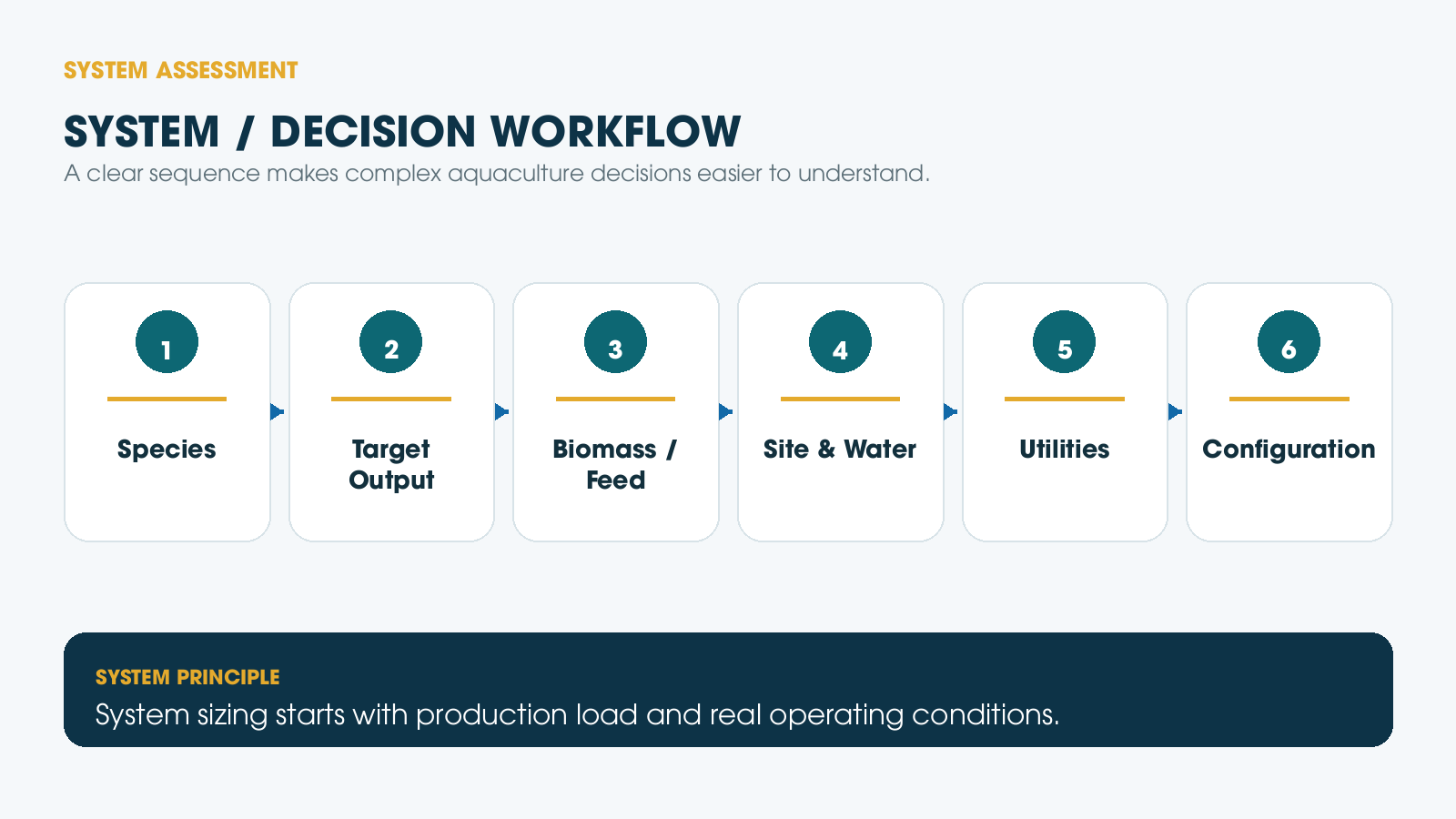
Hatch Hives describes both RAS equipment and CRAS as customisable. A site-built RAS generally offers the greatest layout freedom because equipment can be selected and positioned individually. CRAS is customisable within the container architecture: the product page lists mechanical filtration, MBBR biological treatment, protein skimming, ozone, UV, pumps, monitoring, PLC controls and temperature management as available integrated functions.
A containerised system still needs utilities and infrastructure. Water connections, power, drainage, oxygen or air requirements, heating or cooling, access and maintenance space must be considered. A customised RAS has the same needs but may allow utilities to be distributed differently. The best option is the one that fits the real site without creating unnecessary complexity for operators.
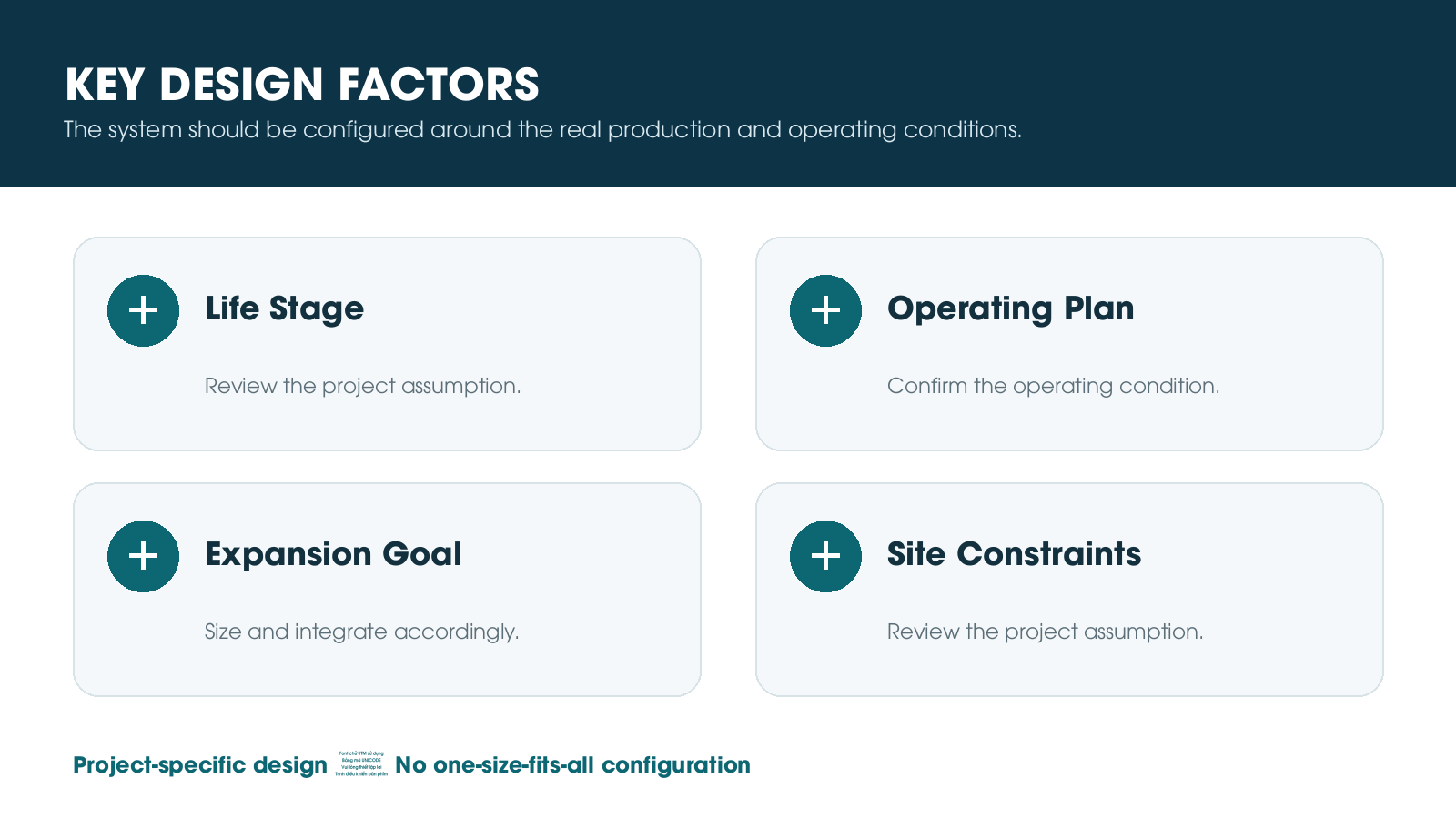
Daily operation should influence the architecture decision. Operators need safe access to filters, pumps, control panels, monitoring points and cleaning areas. They need to understand water flow and know how to respond to alarms or changes in system behaviour. Hatch Hives offers installation, setup, maintenance and troubleshooting support, but the farm's own routine remains central to reliable operation.
Choose CRAS when a compact, integrated and modular treatment platform aligns with the site and project plan. Choose a customised RAS when the facility needs more layout freedom or a treatment plant built around a specific production workflow. If the project is still uncertain, a preliminary system assessment can compare both options using the same production and site inputs.
A simple comparison workshop can make the RAS-versus-CRAS decision clearer. Put both options against the same project criteria and score what matters most to the farm: footprint, site works, modularity, maintenance access, operator familiarity, utility routing and future expansion. The goal is not to force a numeric winner, but to expose the trade-offs. Once the team agrees on the priorities, the preferred architecture usually becomes easier to justify technically and commercially.
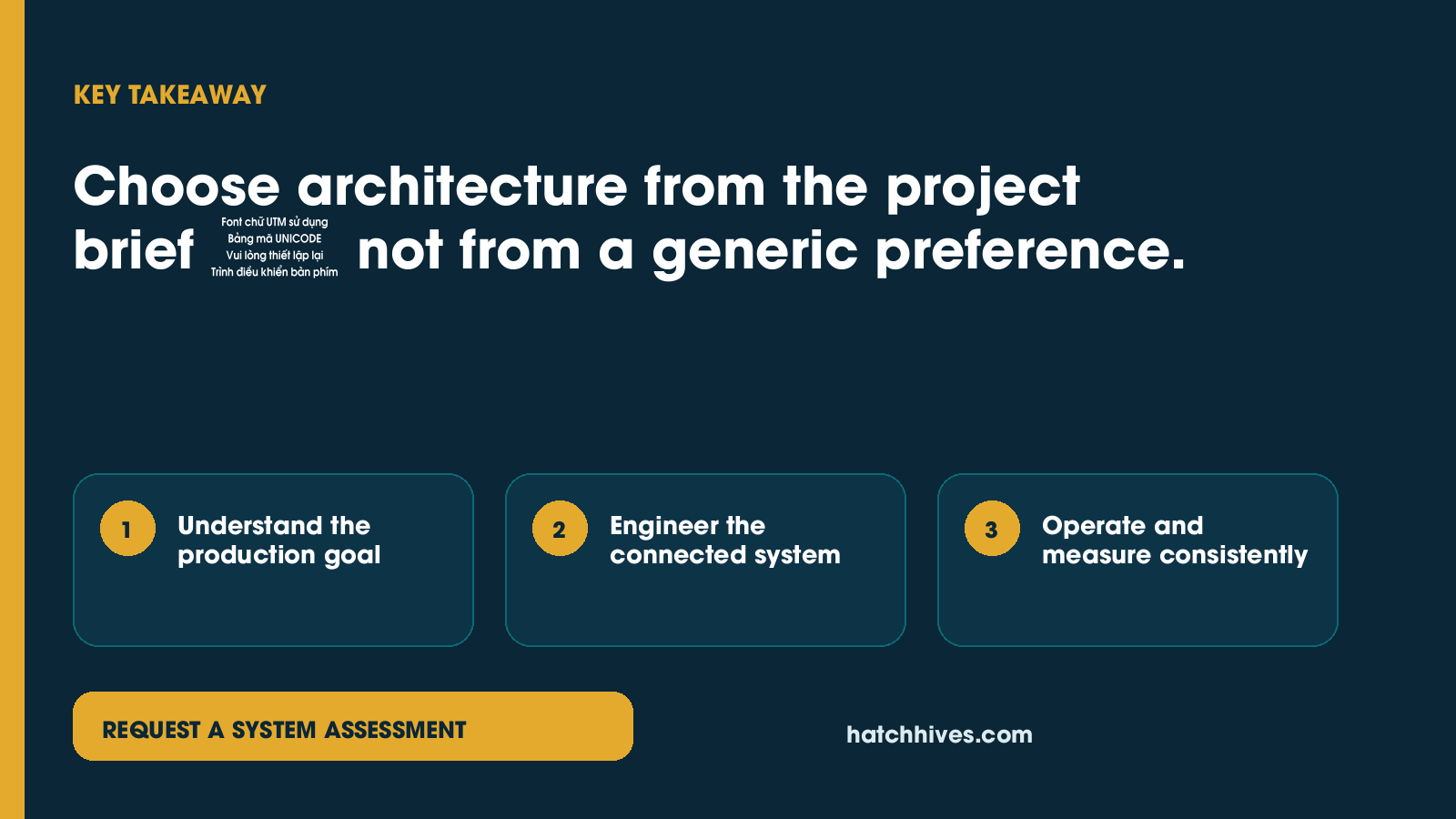
Next step: Ask Hatch Hives to compare RAS and CRAS for your site.