
About UsConsultation
Products


NewsContact usIndoor RAS System Equipment
Pumps
Indoor Farming Equipment
Outdoor farming Equipment





No items found.


Indoor RAS System Equipment
Pumps
Indoor Farming Equipment
Outdoor farming Equipment
Sustainability
16 January 2026
A Recirculating Aquaculture System (RAS) is an advanced aquaculture technology that enables the cultivation of aquatic species in a fully controlled, land-based environment. By continuously treating and reusing water, RAS minimizes water consumption while maximizing productivity, biosecurity, and sustainability.
At Hatch Hives, RAS is more than a system — it is a platform for scalable, circular, and climate-smart aquaculture, designed to meet the future demand for sustainable protein.
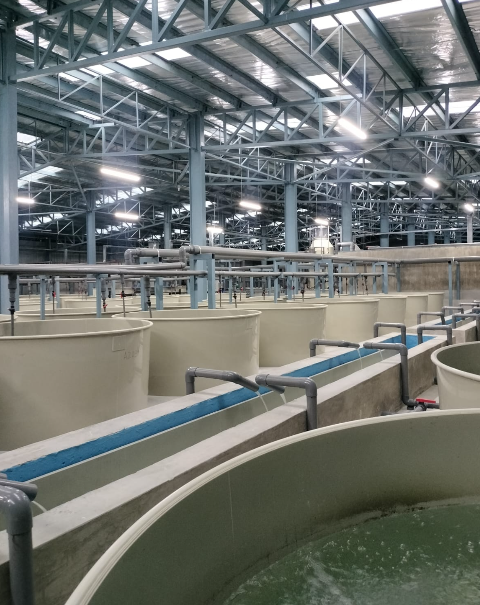
RAS operates through a closed-loop process where water is continuously filtered, treated, and reused. Each component plays a critical role in maintaining optimal conditions for aquatic life.
Aquatic species are raised in purpose-designed tanks where feeding and growth occur. Waste generated in this stage must be removed efficiently to protect animal health and performance.
Solid waste such as uneaten feed and fecal matter is removed through mechanical filtration systems. Early removal prevents organic breakdown and reduces biological load on the system.
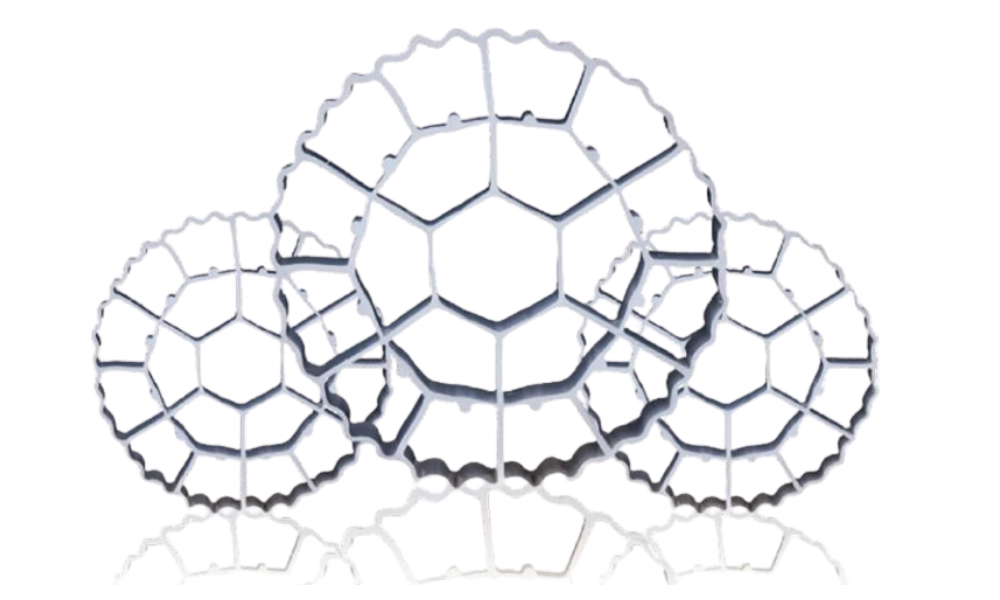
The biological filter is the core of RAS performance. Beneficial nitrifying bacteria convert toxic ammonia into nitrite and then into nitrate, maintaining safe water quality and stable production conditions.
RAS integrates precise oxygen delivery and carbon dioxide removal. Stable dissolved oxygen levels are essential for high growth rates, feed efficiency, and animal welfare.
RAS allows full control over:
This stability significantly reduces stress and enables year-round, predictable production.
More than 90–99% of water is reused, with minimal replacement to compensate for evaporation and waste removal — making RAS one of the most water-efficient food production systems available today.
Traditional aquaculture systems face challenges related to water use, disease risk, land availability, and environmental impact. RAS addresses these challenges by design.
At Hatch Hives, RAS is integrated into modular, containerized, and circular systems, enabling deployment in diverse locations — from urban centers to remote communities.
RAS supports a wide range of species, including:
Controlled environments allow each species to reach optimal performance potential.
RAS does require technical expertise, monitoring, and investment. However, when designed and managed correctly, it delivers unmatched efficiency, sustainability, and scalability.
RAS isn’t magic — it’s science. Efficient, sustainable, and powerful when managed right.
As global pressure on water, land, and marine ecosystems increases, RAS represents a critical pathway forward. With advances in automation, data analytics, and circular resource use, RAS will continue to redefine how food is produced.
At Hatch Hives, we see RAS as the foundation for resilient, future-ready aquaculture ecosystems.
#RecirculatingAquacultureSystem #RAS #Aquaculture #SustainableAquaculture #BlueEconomy #AgTech #FutureOfFood #CircularEconomy #HatchHives
Related articles