
About UsConsultation
Products


NewsContact usIndoor RAS System Equipment
Pumps
Indoor Farming Equipment
Outdoor farming Equipment





No items found.


Indoor RAS System Equipment
Pumps
Indoor Farming Equipment
Outdoor farming Equipment
Sustainability
24 December 2025
In a world facing climate pressures, resource scarcity, and rising production costs, the circular economy is no longer a trend — it’s a necessity. Unlike the traditional take–make–dispose model, a circular economy keeps resources in use for as long as possible, extracting their maximum value before regenerating them back into the system.
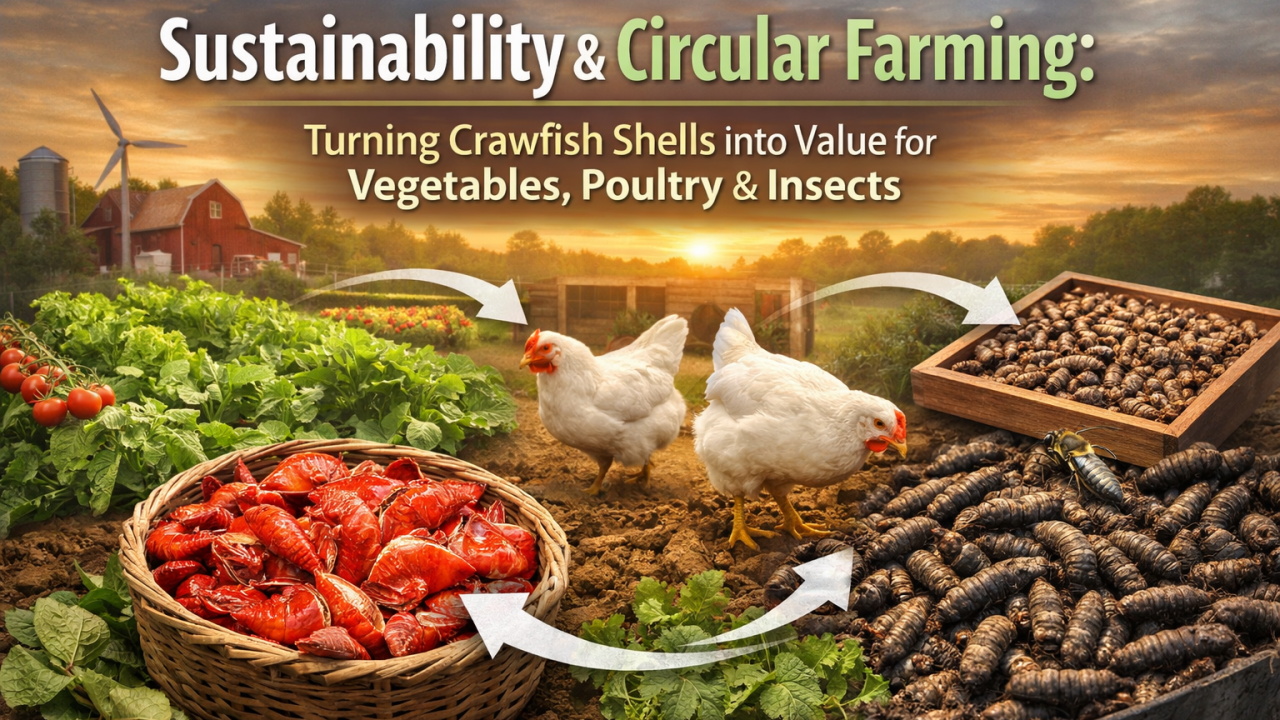
One of the most exciting examples of this approach is a closed-loop biological cycle that connects insects → livestock → crawfish → vegetables — a sustainable ecosystem where each stage feeds the next, transforming “waste” into opportunity.
Insects such as black soldier fly larvae (BSFL) can convert organic waste into high-quality protein.
The larvae can then be used as nutritious feed for chickens, fish, and other livestock.
Livestock produce manure that is often under-utilized. When processed correctly, it becomes a powerful resource:
Crawfish thrive in nutrient-rich environments. Manure-enriched water from livestock systems can be used to support crawfish ponds, reducing the need for synthetic fertilizers.
The final step closes the loop. Vegetable farms benefit from:
The vegetables then create organic waste again — which insects feed on — and the cycle repeats.
Every by-product has a purpose. Nothing is discarded. This reduces landfill waste and cuts environmental pollution.
Each component of the loop reduces emissions:
This system uses significantly less:
It creates more food per unit of resource consumed.
Diverse production streams — protein, aquaculture, vegetables — make food systems more resilient and adaptable to climate change.
Circular systems turn costly inputs into free or low-cost resources, improving profitability while remaining sustainable.
The circular economy is redefining how we think about agriculture, food systems, and sustainability. Innovative biological cycles like insects → livestock → crawfish → vegetables are proving that we can build systems that are:
As industries worldwide move toward carbon reduction and sustainable solutions, closed-loop models offer a blueprint for long-term resilience.
We are entering an era where sustainability is not just good for the planet — it’s good for business. The circular economy represents one of the most promising paths forward, transforming today’s waste into tomorrow’s value.
If we embrace these systems now, we set the stage for a healthier planet, stronger food security, and a more sustainable future for generations to come.
Related articles