
About UsConsultation
Products


NewsContact usIndoor RAS System Equipment
Pumps
Indoor Farming Equipment
Outdoor farming Equipment






No items found.


Indoor RAS System Equipment
Pumps
Indoor Farming Equipment
Outdoor farming Equipment
Equipment
12 September 2026
The right aquaculture system starts with the right information. Hatch Hives provides consultation across aquaculture and related farming sectors, including farm and hatchery design, installation and setup, maintenance, technical assistance and data-monitoring development. For a preliminary RAS, CRAS or farm-upgrade discussion, the most useful input is a clear description of the production goal and the real conditions in which the system will operate.
Start with the species, life stage and target production output. If available, include the planned production cycle, maximum biomass and feed assumptions. These details help translate the commercial goal into a treatment load. If the farm is still at concept stage, identify which numbers are estimates so they can be refined during design.
Describe the current or planned site. Include available floor area, building or outdoor layout, water source, salinity, temperature and any known drainage or discharge constraints. For an existing farm, photographs and a simple layout can help the technical team understand how new equipment might be integrated.
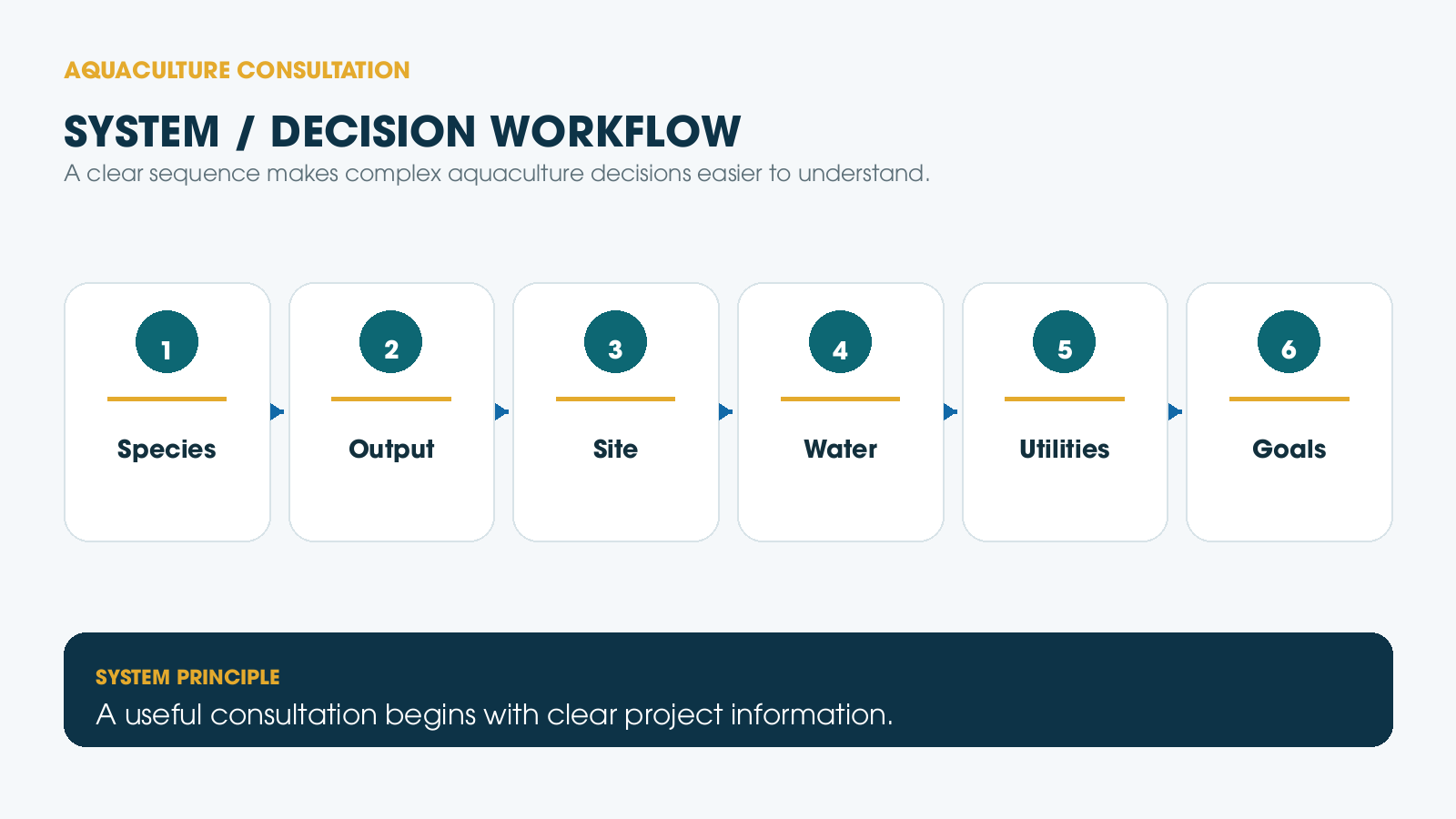
List the power supply and any backup arrangements, freshwater or seawater availability, air or oxygen systems, heating or cooling needs and other important utilities. CRAS and customised RAS both need proper connections and site readiness. Utility information helps the engineering team identify what the system can realistically support.
If the project is an upgrade, explain how the farm currently manages water. Describe tanks, pumps, filtration, water exchange, monitoring and the labour routine. The goal is not to criticise the existing system; it is to identify what works, what creates problems and which parts should be retained or replaced.
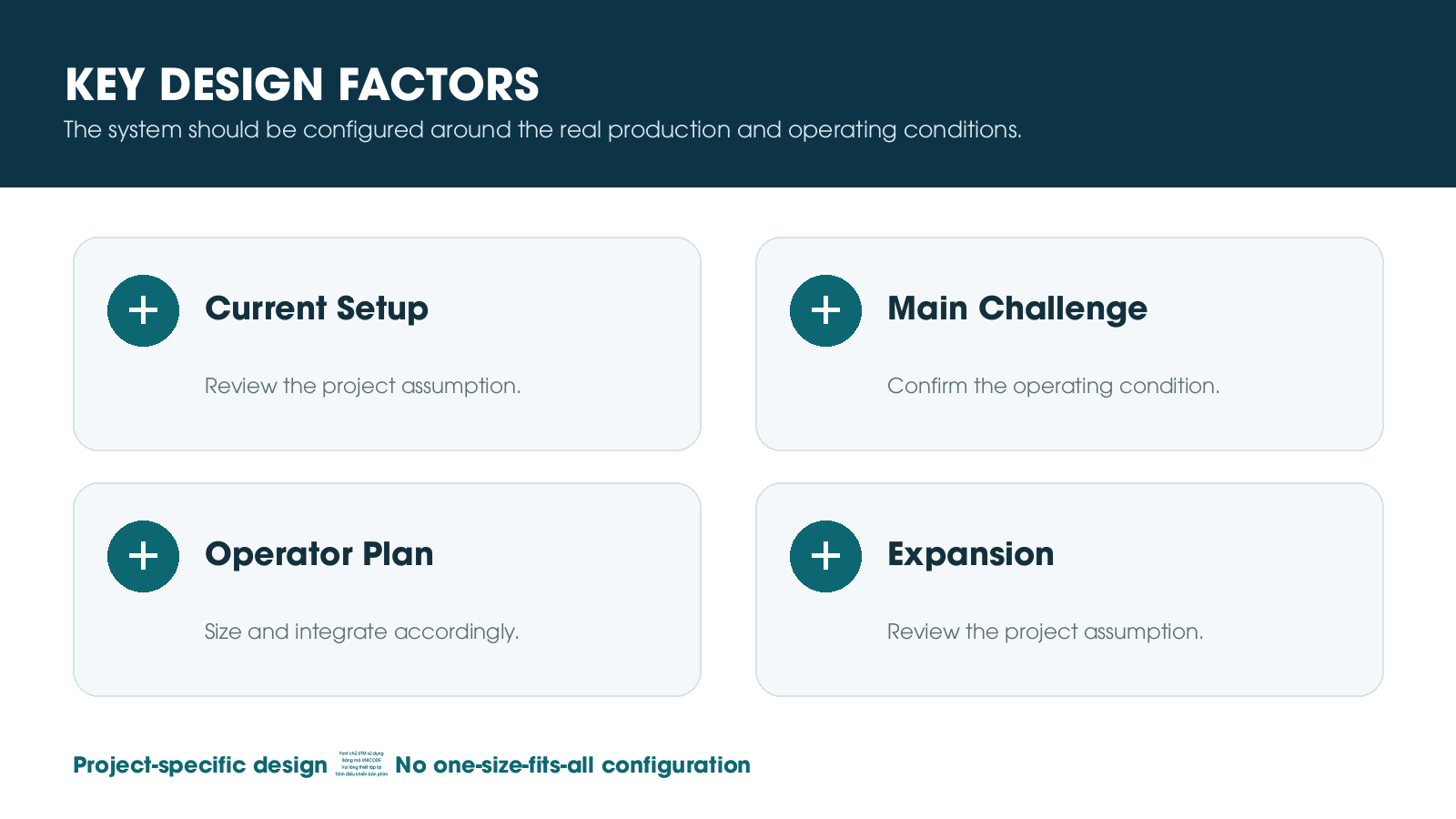
State the problem you are trying to solve. It may be inconsistent water conditions, limited space, high manual workload, difficulty scaling, a need for better solids management or a desire to move from traditional farming into a more controlled production model. Clear priorities help the consultation focus on the right architecture instead of discussing technology in general.
Explain whether the project is a pilot, first commercial phase or expansion of an existing operation. Also identify the level of installation, commissioning, training and maintenance support the team expects. Hatch Hives' consultation scope includes on-site setup, staff training, troubleshooting and maintenance, so these requirements can be considered as part of the project rather than added after the equipment decision.
A preliminary discussion should help clarify the next technical step: Compact RAS, customised RAS, CRAS, targeted equipment upgrade or further feasibility work. From there, the project can move into system design, equipment configuration and a more detailed commercial proposal. Good consultation reduces guesswork by making the project brief explicit before major decisions are made.
To make the first consultation productive, send the project information before the meeting where possible. A one-page brief with photos, a simple layout and the main operating questions can save time and help the technical team prepare relevant options. The consultation can then focus on trade-offs, missing information and next steps instead of spending the entire session collecting basic facts. The result should be a clearer direction for feasibility, system design, equipment configuration or a pilot phase.
Next step: Contact Hatch Hives to start a preliminary system discussion.
Hatch Hives — Home: https://www.hatchhives.com/
Hatch Hives — Consultation: https://www.hatchhives.com/consultation
Hatch Hives — Contact / FAQ: https://www.hatchhives.com/contact
Compact Recirculating Aquaculture System (RAS): https://www.hatchhives.com/product/integrated-ras-system
Recirculating Aquaculture System (RAS): https://www.hatchhives.com/product/recirculating-aquaculture-system-ras
Container Recirculating Aquaculture System (CRAS): https://www.hatchhives.com/product/cras---container-recirculating-aquaculture-system
Stainless Rotary Drum Filter: https://www.hatchhives.com/product/stainless-rotary-drum-filter
Moving Bed Biological Filter: https://www.hatchhives.com/product/moving-bed-biological-filter
Biological Filter Tank: https://www.hatchhives.com/product/biological-filter-tank
Protein Skimmer: https://www.hatchhives.com/product/protein-skimmer
Bio-media: https://www.hatchhives.com/product/bio-media
Intro to RAS: How it works: https://www.hatchhives.com/news/intro-to-ras-how-it-works-recirculating-aquaculture-system
Editorial guardrail: Where the Hatch Hives website makes broad performance claims, these drafts use conservative project-specific wording unless the article is explicitly describing a published product specification. System capacity, operating performance and financial outcomes should be validated against the final engineering proposal before publication.
Prepare for an aquaculture consultation with Hatch Hives by sharing species, output, site, water, utilities, current setup, challenges and expansion goals.