
About UsConsultation
Products


NewsContact usIndoor RAS System Equipment
Pumps
Indoor Farming Equipment
Outdoor farming Equipment






No items found.


Indoor RAS System Equipment
Pumps
Indoor Farming Equipment
Outdoor farming Equipment
Equipment
08 September 2026
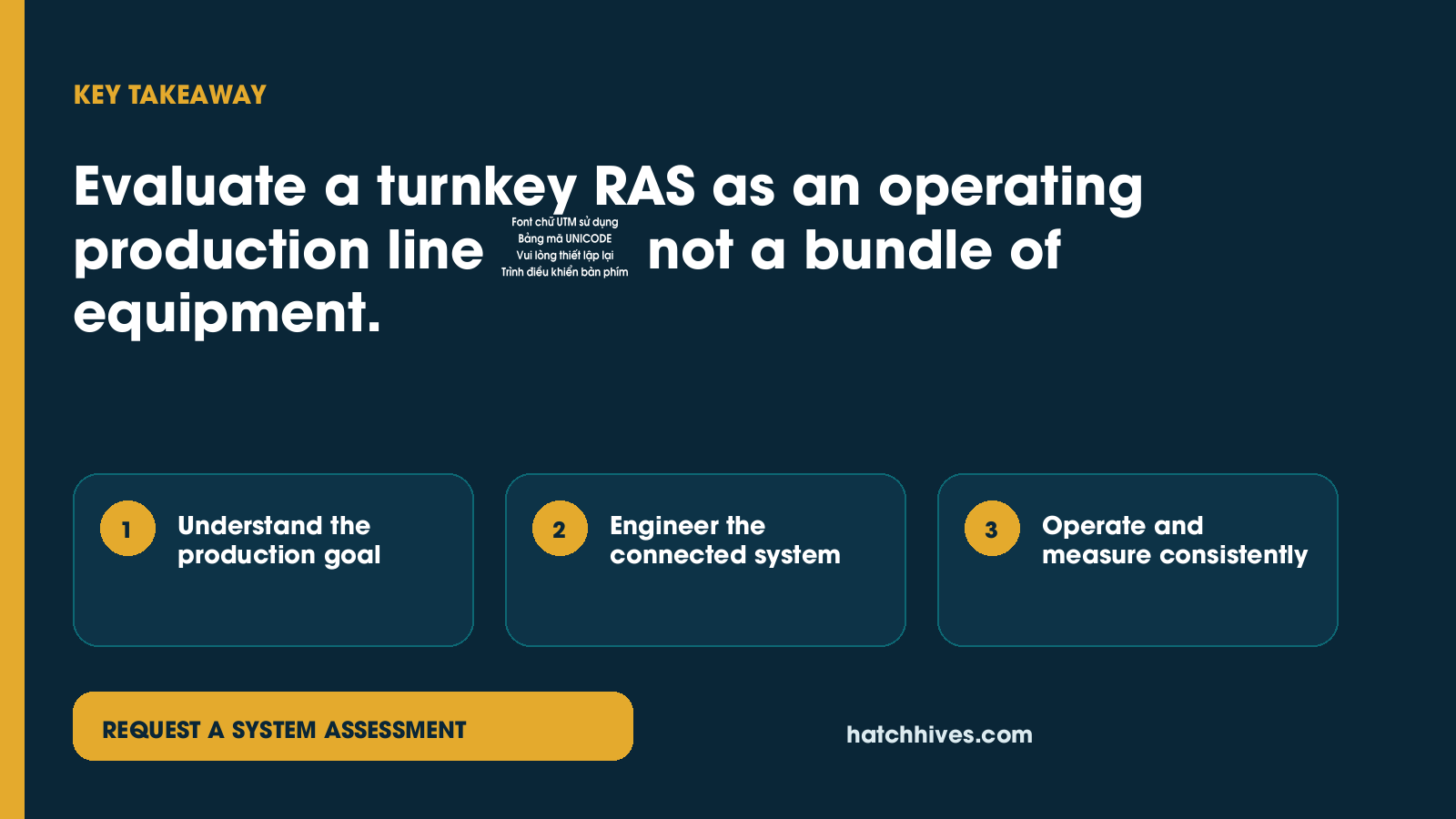
A turnkey recirculating aquaculture production line is not simply a bundle of tanks, pumps and filters. For a buyer, the real value of a turnkey approach is that the system is designed as a complete water-management and operating platform. The culture tanks create a predictable biological load; the treatment line is sized to manage that load; controls help operators understand the system; and installation, commissioning and training connect the engineering design to daily farm operation.
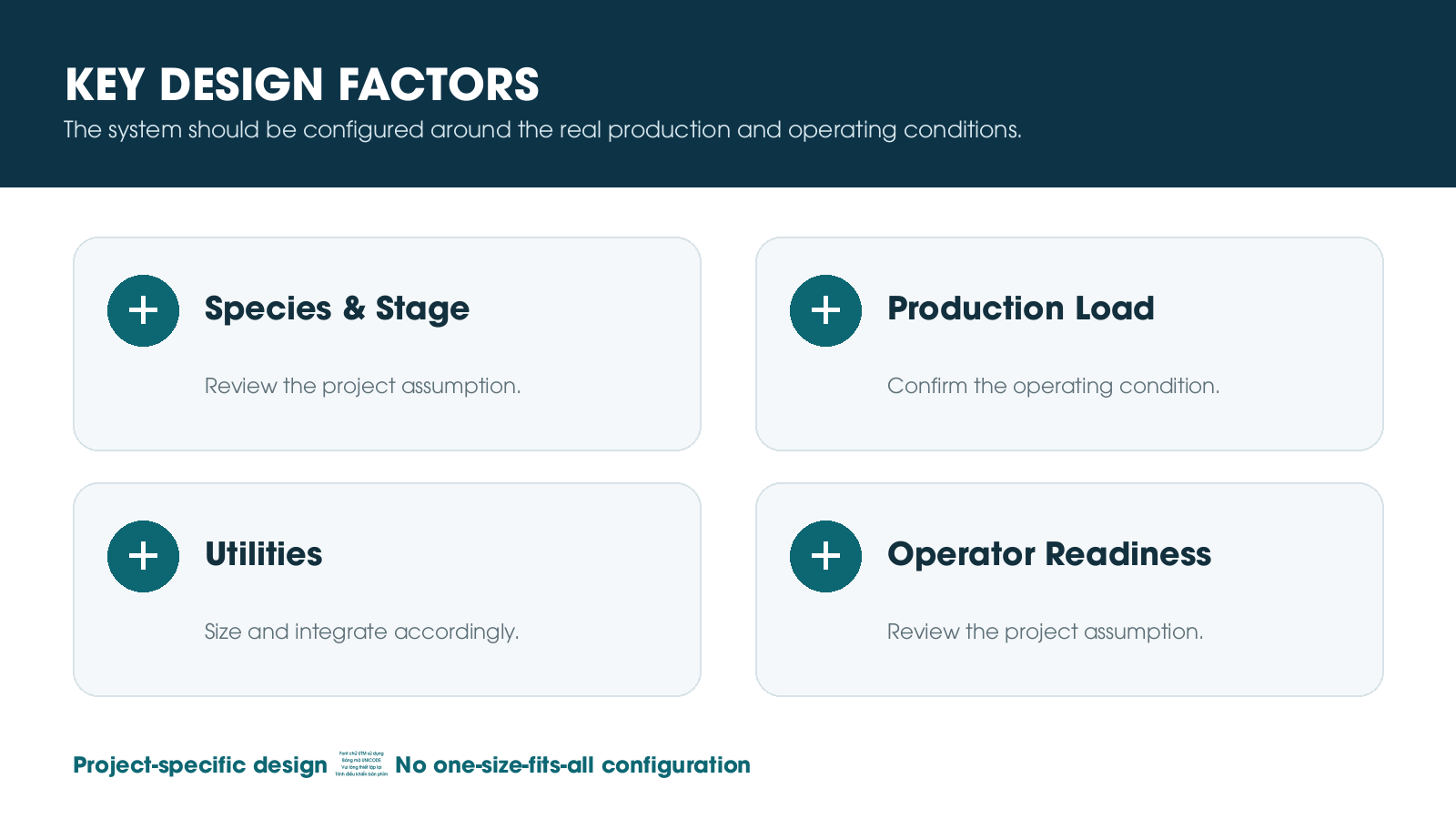
Before equipment is selected, the project needs a design basis. At minimum, the discussion should cover species and life stage, target output, expected biomass and feed load, water source, temperature, salinity where relevant, site constraints, available power and water, labour capability and plans for future expansion. Hatch Hives' contact FAQ stresses that equal water volumes do not automatically require equal systems. The biological and operational requirements must be reviewed first.
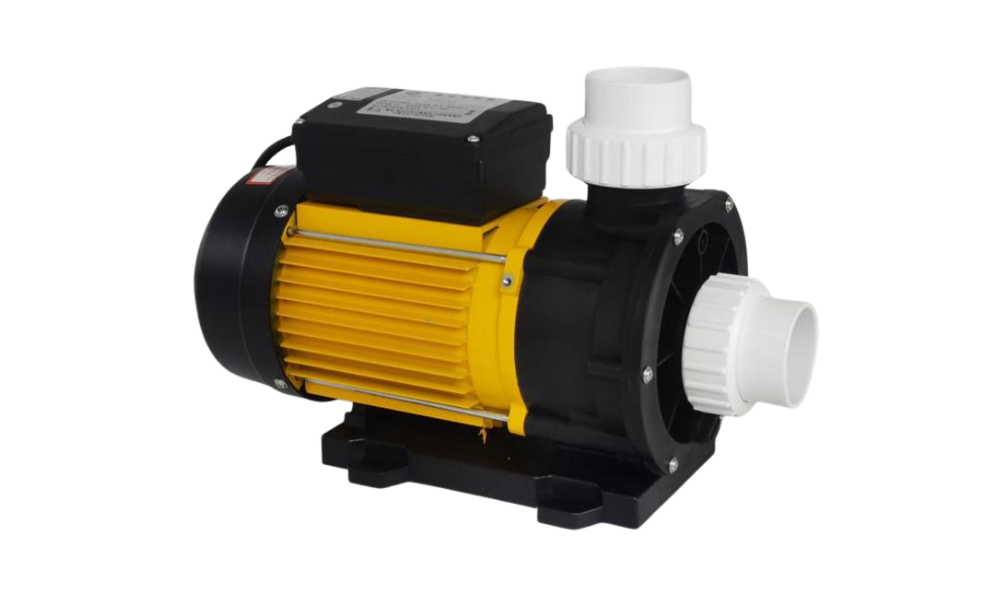
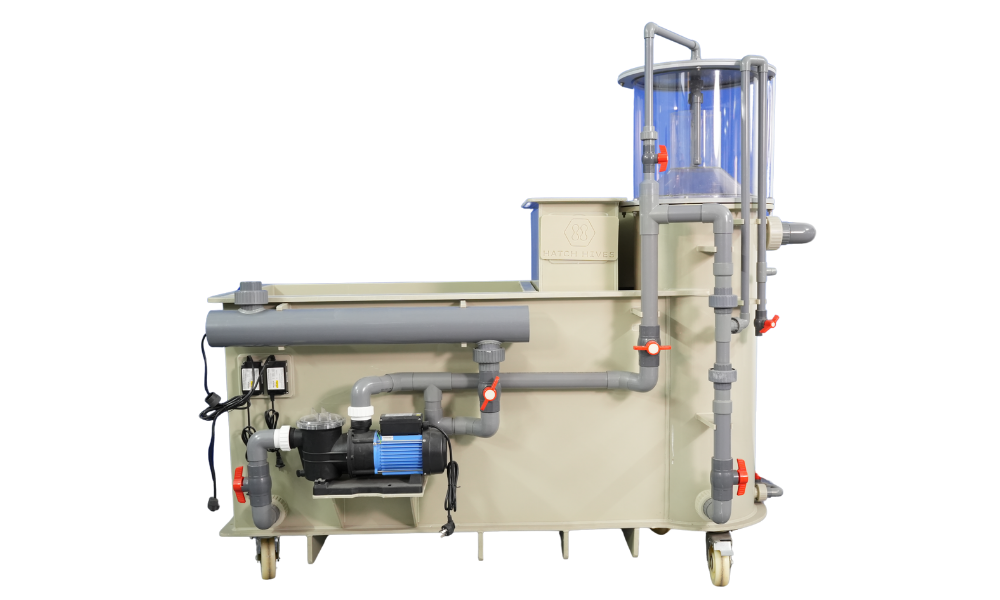
A buyer should be able to see how water moves from the culture tanks through mechanical filtration, biological treatment and any additional conditioning stages before returning to production. Hatch Hives' product range supports this type of line with drum filtration, biological filters, bio-media, protein skimming, pumps and complete RAS/CRAS solutions. For some projects, UV, ozone, heating or cooling and monitoring can also form part of the treatment architecture. The exact combination should be linked to the project rather than assumed to be identical for every farm.
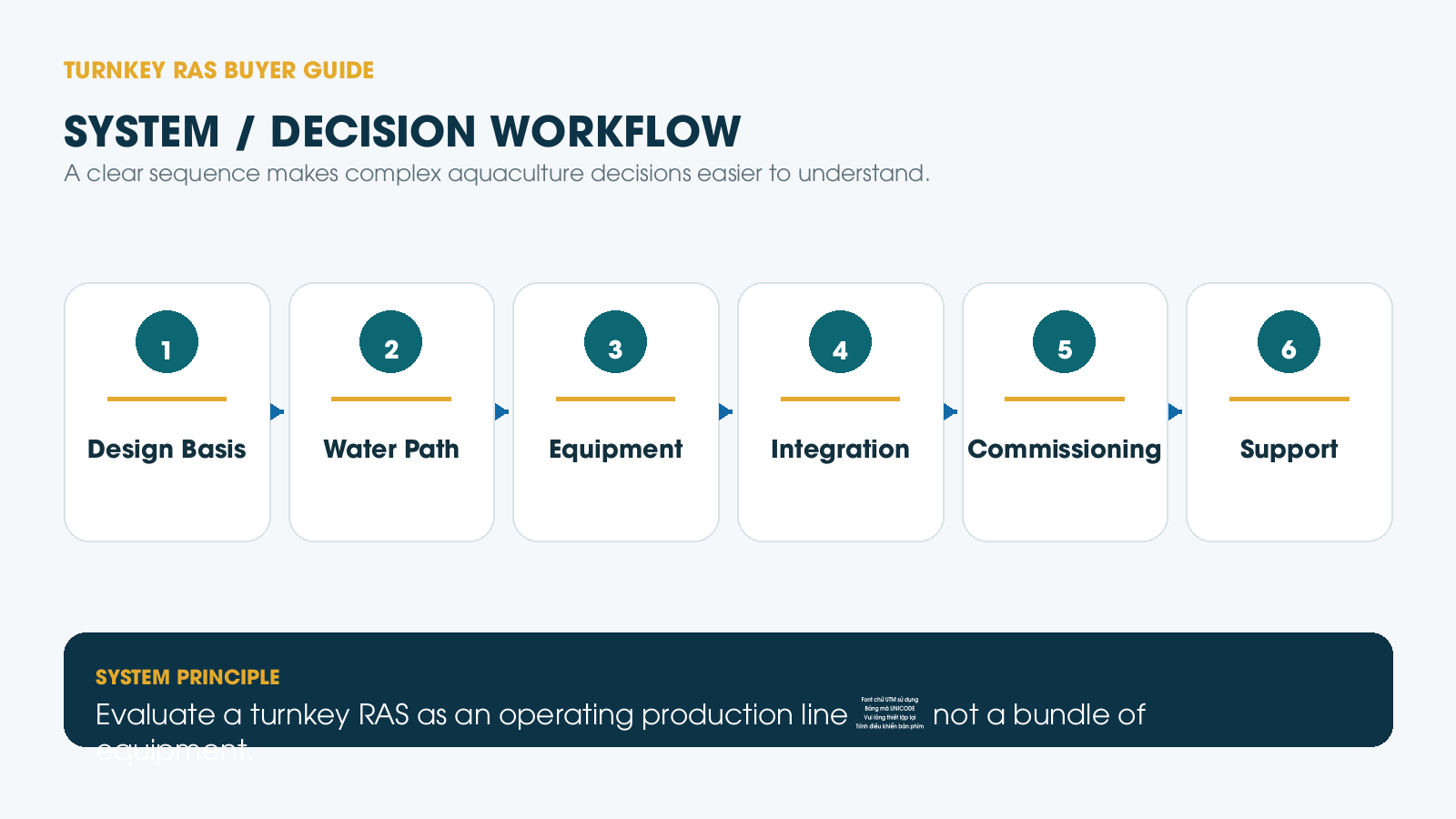
Individual equipment specifications are useful, but a production line must also work hydraulically and operationally. Flow capacity, head loss, pump selection, pipe routing, bypasses, cleaning access, redundancy and controls all influence the final result. A good supplier discussion should explain how one treatment stage protects or prepares the next stage. Mechanical solids removal, for example, reduces the amount of particulate material that would otherwise continue into downstream treatment.
Hatch Hives states that its consultation service can extend into complete installation and setup. For a buyer, commissioning should verify that equipment is installed correctly, water is moving through the intended paths, controls and alarms function, and operators know the basic procedures. Site readiness also matters. Even modular equipment still needs appropriate utilities, connections, access and operating preparation.
RAS is an operating system, not a one-time purchase. Maintenance, troubleshooting, consumables, wear parts, calibration and operator knowledge continue after handover. Hatch Hives describes routine check-ins, maintenance and technical assistance as part of its after-sales approach, and its FAQ states that technological components and equipment are supplied with a one-year warranty. Buyers should confirm which support items apply to their specific quotation and location.
Ask for a clear system description, design assumptions, major equipment list, layout or flow diagram, utility requirements, installation responsibility, commissioning scope, training scope and support terms. A turnkey production line should reduce ambiguity by connecting these elements into one technical and commercial package.
When comparing turnkey quotations, place the proposals side by side using the same headings: design assumptions, treatment flow, major equipment, utility demand, site works, installation, commissioning, training, warranty and after-sales support. A lower equipment total can become less attractive if important integration or operating responsibilities are excluded. The purpose of a buyer's guide is therefore not to create a universal specification, but to make the scope visible enough that different proposals can be compared on a like-for-like basis.
Next step: Request a project-specific turnkey system assessment.