
About UsConsultation
Products


NewsContact usIndoor RAS System Equipment
Pumps
Indoor Farming Equipment
Outdoor farming Equipment





No items found.


Indoor RAS System Equipment
Pumps
Indoor Farming Equipment
Outdoor farming Equipment
Equipment
09 September 2026
A Recirculating Aquaculture System (RAS) continuously treats and reuses water within a controlled culture system. Hatch Hives describes RAS as an advanced method for fish and shrimp farming that integrates mechanical and biological filtration so water can be managed and returned to production. The exact design varies by species, load and site, but the workflow follows a simple principle: each treatment stage solves a different water-quality problem before the water completes the loop.
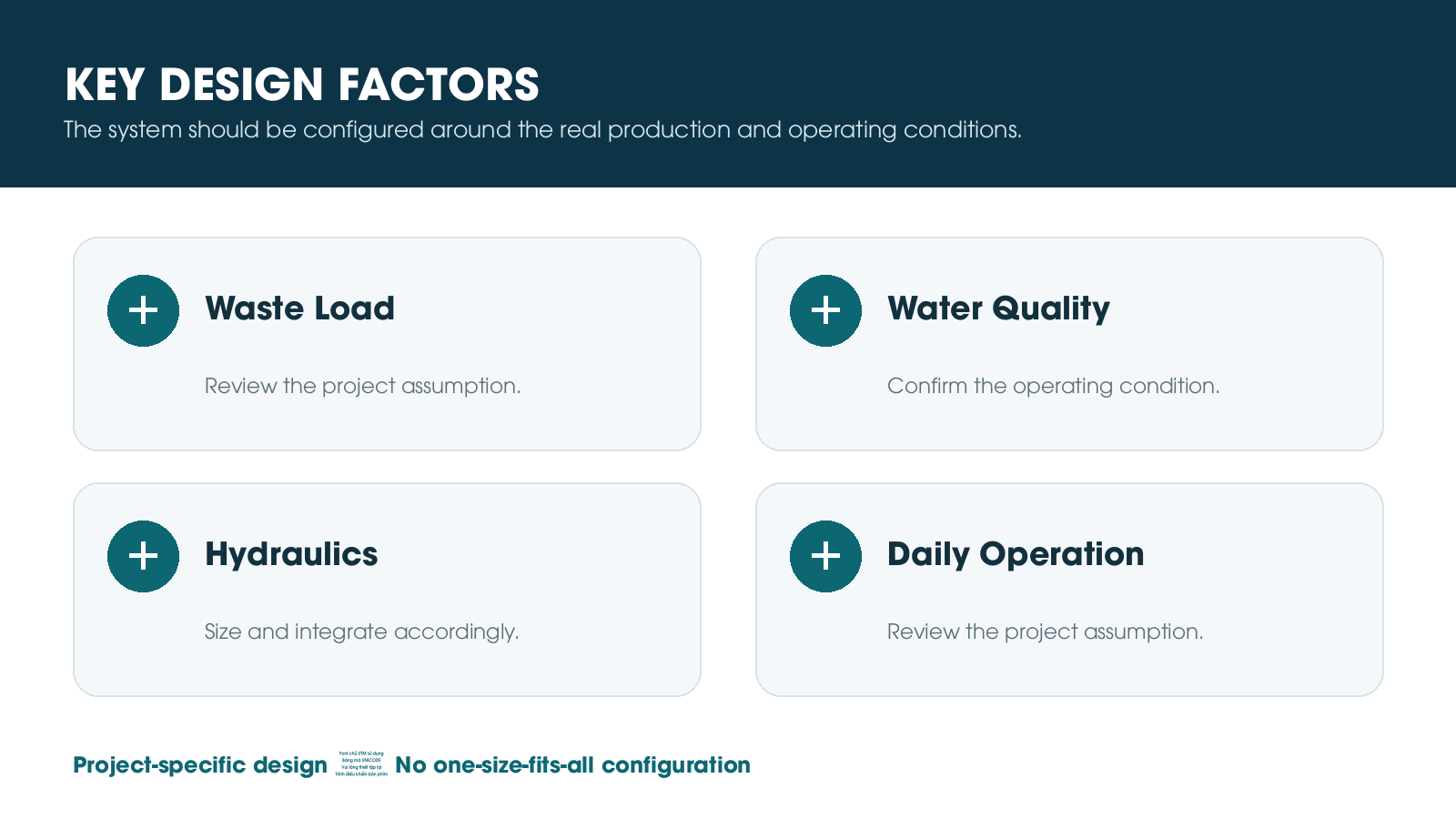
The culture tank is the production environment. Feed is added, animals respire and waste is generated. That means the treatment system must be designed around what happens inside the culture area. The amount of stock and feed affects solids production, oxygen demand and the load placed on biological treatment. Tank volume is therefore only one part of the capacity discussion.
The first treatment priority is usually to remove suspended solids before they break down further. Hatch Hives supplies stainless rotary drum filters across a range of flow capacities. A drum filter screens water and separates solids from the main water flow. In an integrated system, effective solids removal protects downstream treatment and helps operators manage the waste stream more deliberately.
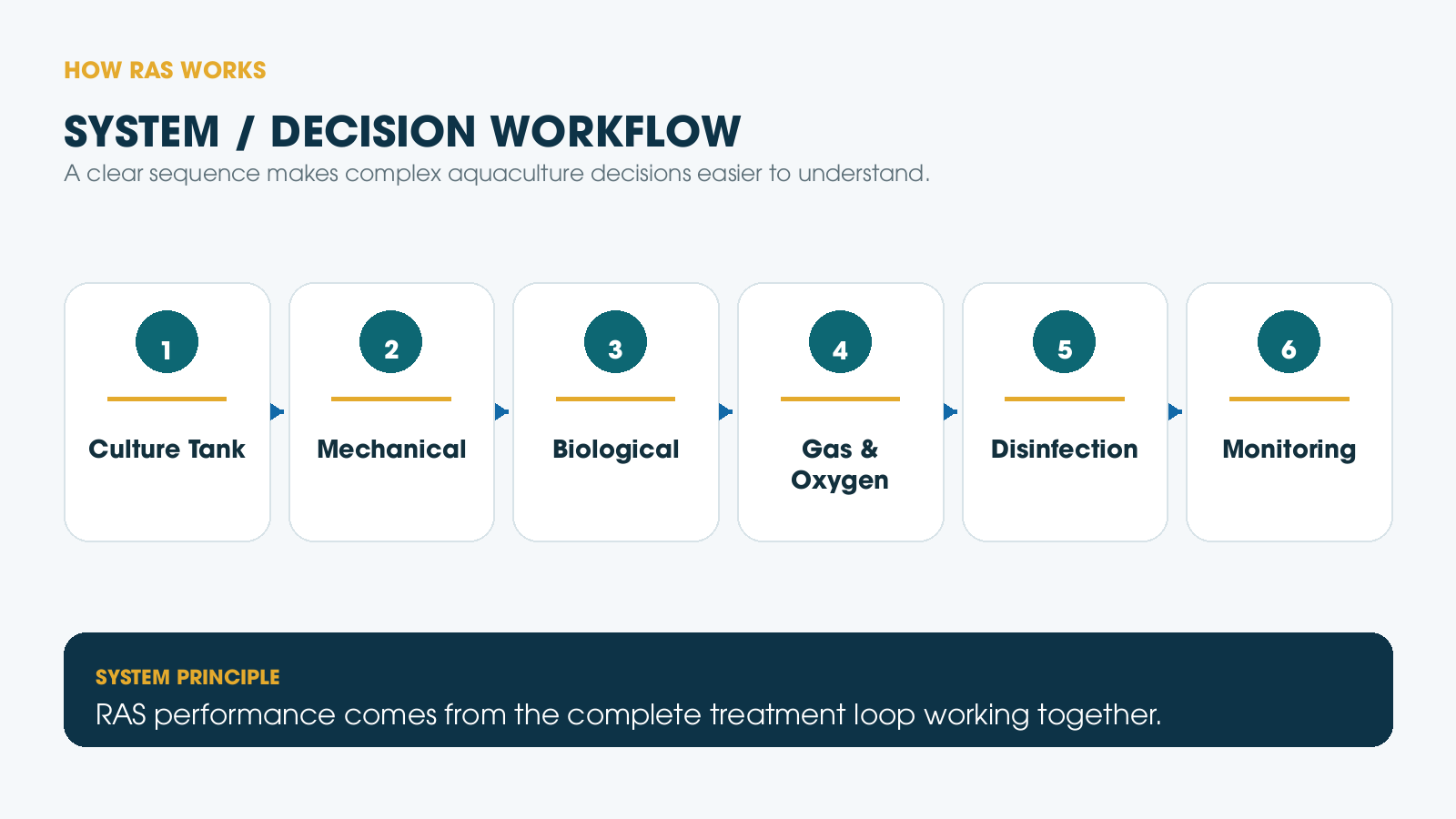
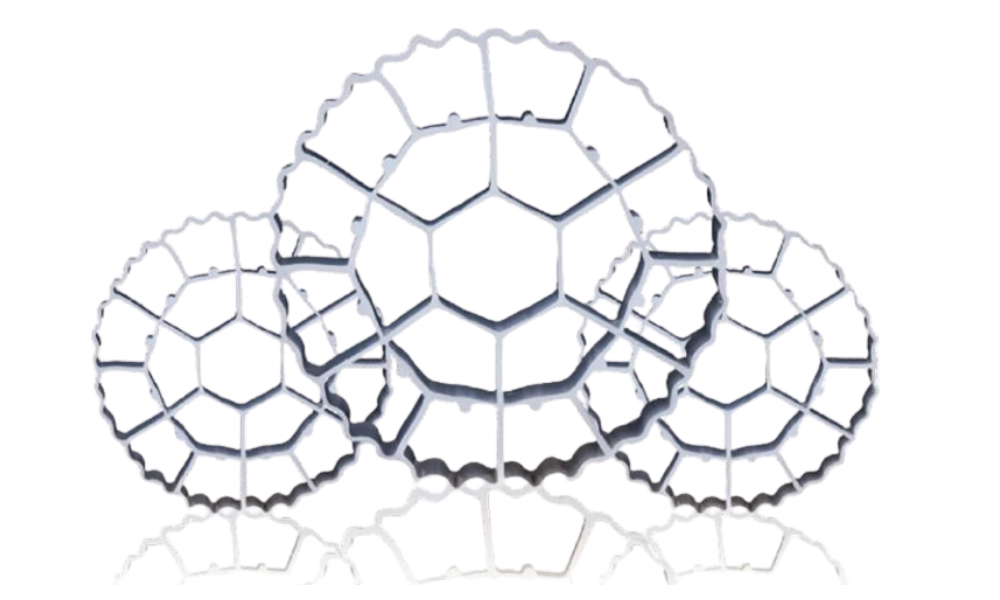
Fish and shrimp excrete nitrogenous waste, and biological filtration creates a managed environment for beneficial microorganisms. Hatch Hives lists both moving-bed biological filters and biological filter tanks, as well as dedicated bio-media. The purpose of this stage is not to make the water “perfect” by itself. It is one part of the loop, sized and operated in relation to feed load, flow and the other treatment stages.
A controlled culture system must also manage gases and oxygen. Depending on the project, equipment may be used to add oxygen, remove unwanted gases or support stable conditions. Hatch Hives' CRAS configuration also lists protein skimming, ozone, UV, water and air pumps, heating and chilling, flow measurement and water monitoring. These functions are configured according to the project; not every farm requires an identical combination.
The final part of the loop is operational control. Sensors and controls allow the team to track water conditions and system behaviour. Hatch Hives says it is developing data monitoring around parameters such as pH, dissolved oxygen, ammonia and TDS, with a broader goal of using analytics to support faster decisions. Once water has passed through the required treatment stages, it returns to the culture tanks and the cycle repeats.
The easiest way to understand RAS is to follow the water: culture → solids removal → biological treatment → gas and oxygen management → project-specific disinfection and conditioning → monitoring → return. When those stages are sized, connected and operated as one system, the farm gains a more controlled water-management platform.
If you are new to RAS, use the treatment stages as a troubleshooting map. Start at the culture tank and follow the water downstream. Ask what load enters each stage, what the equipment is supposed to remove or control, and what evidence tells the operator that the stage is working. This way of thinking is useful for training because it turns a complex plant into a sequence of understandable functions. It also makes it easier to discuss future upgrades without losing sight of the complete water loop.
Next step: Talk to Hatch Hives about a RAS configuration for your production goal.