
About UsConsultation
Products


NewsContact usIndoor RAS System Equipment
Pumps
Indoor Farming Equipment
Outdoor farming Equipment






No items found.


Indoor RAS System Equipment
Pumps
Indoor Farming Equipment
Outdoor farming Equipment
Equipment
11 September 2026
A useful RAS or CRAS quotation cannot begin with tank volume alone. Hatch Hives states in its FAQ that there is no one-size-fits-all aquaculture system: even the same water volume can require a different design depending on species, stocking conditions and operational goals. A system assessment turns those project realities into an engineering brief so the treatment line, utilities and equipment can be reviewed together.
Species influence water chemistry, temperature, salinity, oxygen needs, behaviour and husbandry. Life stage matters as well because a hatchery, nursery and grow-out operation may have different loads and operating priorities. This is why the first input should always be what you plan to farm and at what stage of production.
The system needs a production objective. Target harvest output is useful, but maximum standing biomass and expected feed input are more directly related to the daily load on filtration, oxygen and water movement. More feed generally means more solids and more dissolved waste for the treatment system to manage. If these numbers are still estimates, they should be identified as assumptions and refined during design.
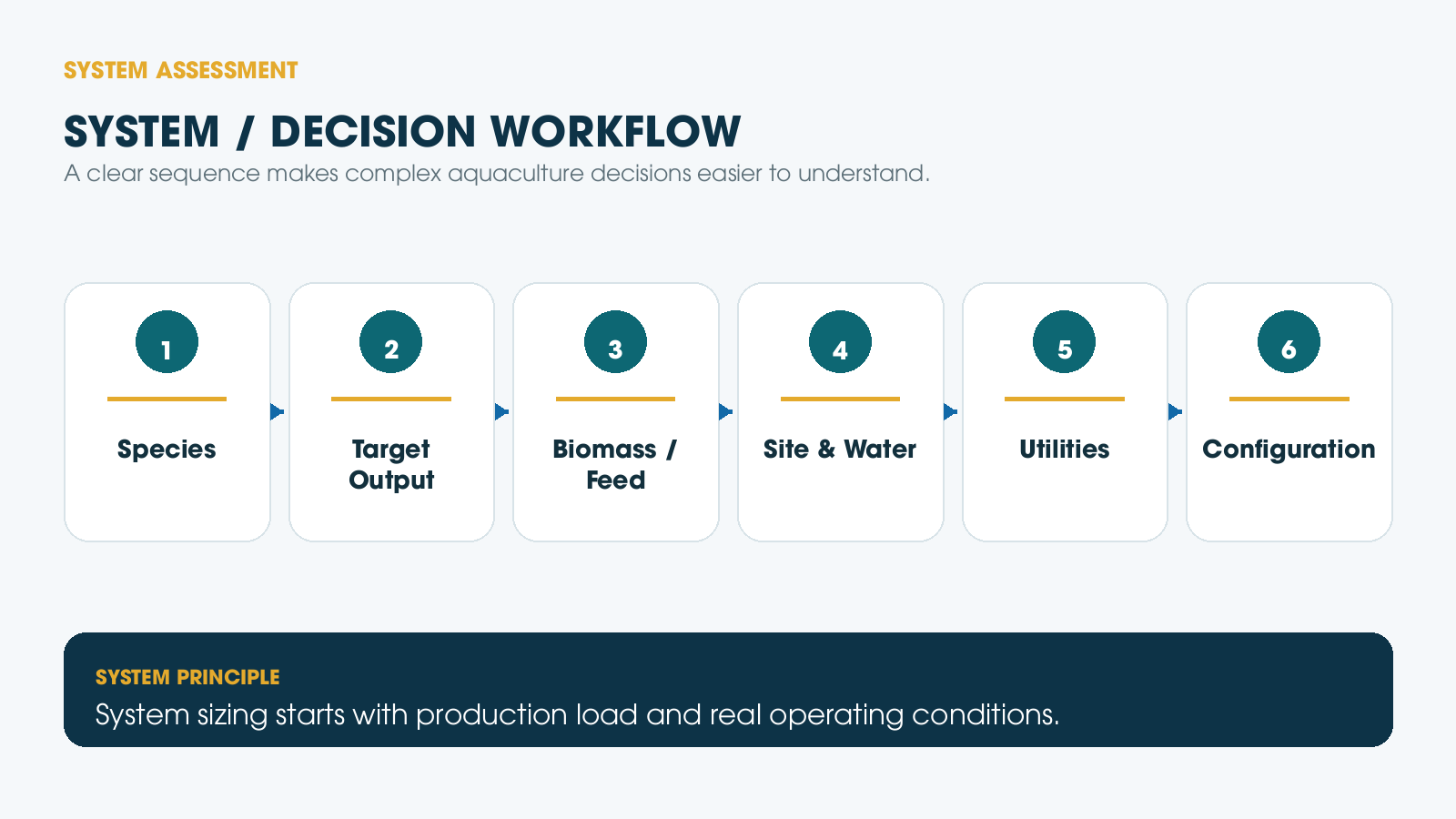
The engineering team needs to understand where the system will operate. Available floor area, building layout, access, drainage, water source, salinity, temperature and discharge arrangements all affect the design. Utilities are equally important: power supply, backup power, freshwater or seawater availability, air and oxygen strategy, and heating or cooling requirements can change the equipment configuration.
For an upgrade project, describe the existing tanks, filters, pumps and water-management routine. Explain the main problems you want to solve. For a new project, describe the team's experience and the labour available for daily checks, cleaning and maintenance. A system should be technically capable but also practical for the people who will operate it.
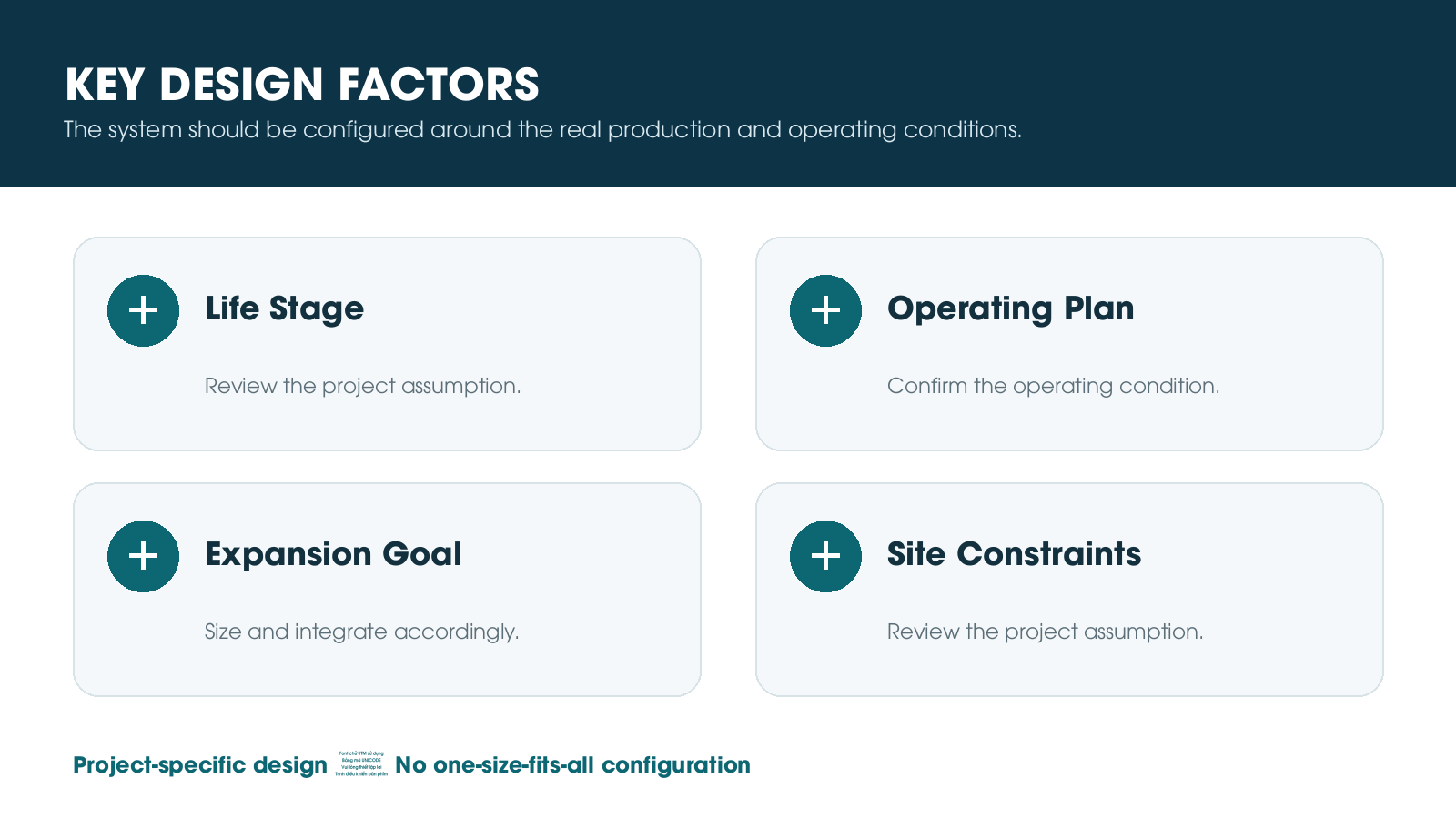
Some farms need a pilot first; others already have a commercial production target. Site expansion, modularity, budget boundaries, timeline and future phases should be discussed early because they influence whether Compact RAS, customised RAS, CRAS or an equipment upgrade is the most practical route. A project-specific assessment helps prevent early equipment choices from limiting later development.
Once the production and site inputs are collected, the next step is an engineering review: define the treatment concept, map the water flow, identify major equipment, check utilities and maintenance access, and clarify what is included in installation, commissioning and support. That creates a more useful basis for a proposal than a quotation built around water volume alone.
A strong assessment does not require every number to be final. It does require assumptions to be visible. If target biomass, feed rate or production cycle is still uncertain, record the current estimate and note that it must be validated. This gives the engineering team something concrete to test instead of filling gaps silently. As the project develops, assumptions can be replaced by confirmed operating data, supplier specifications or pilot results. That creates a traceable path from concept to final design.
The purpose of the assessment is to make those assumptions explicit before equipment is locked in, giving both the farm and engineering team a clearer basis for design, quotation and later commissioning.
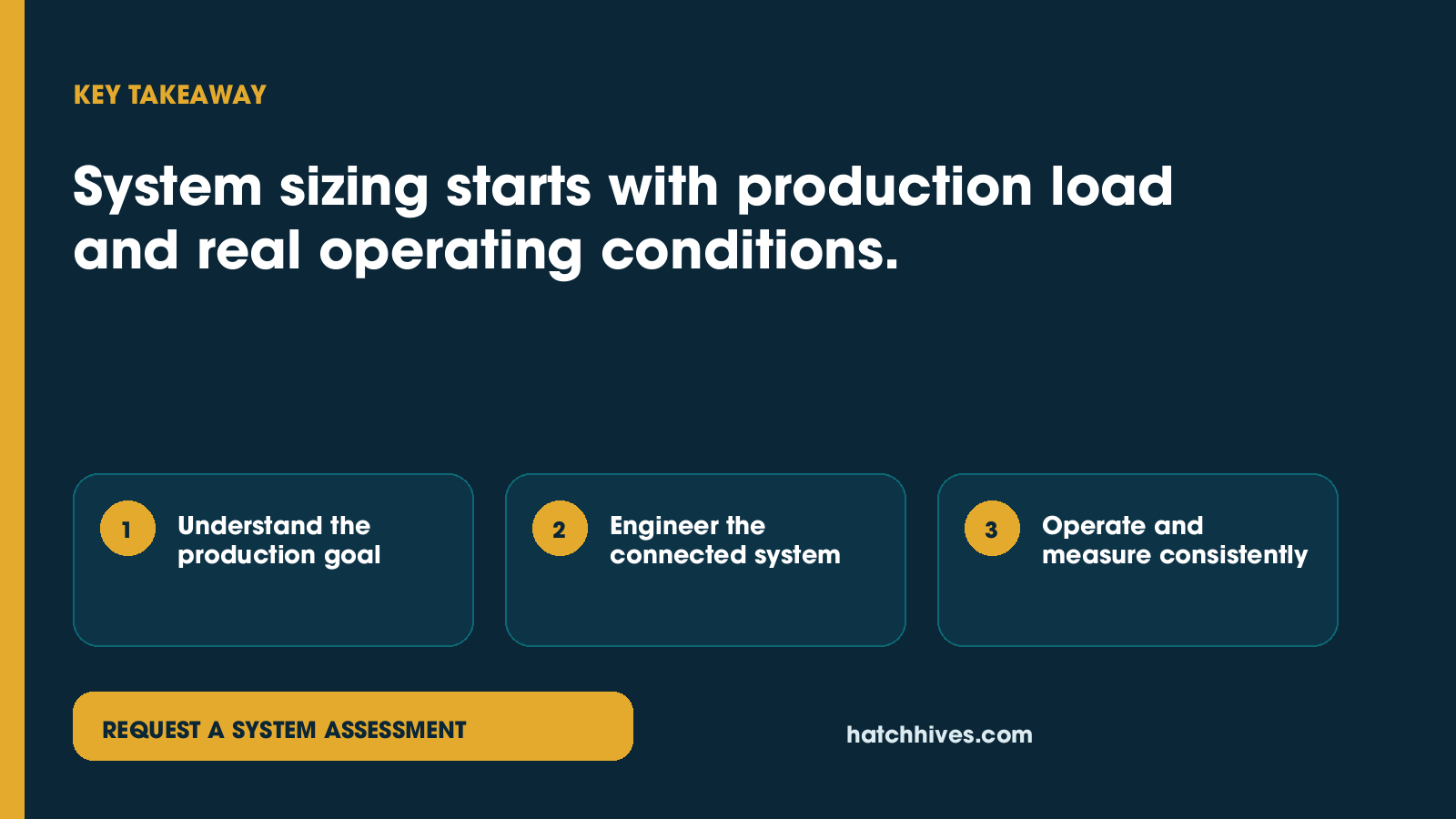
Next step: Submit your project brief to Hatch Hives for preliminary assessment.